

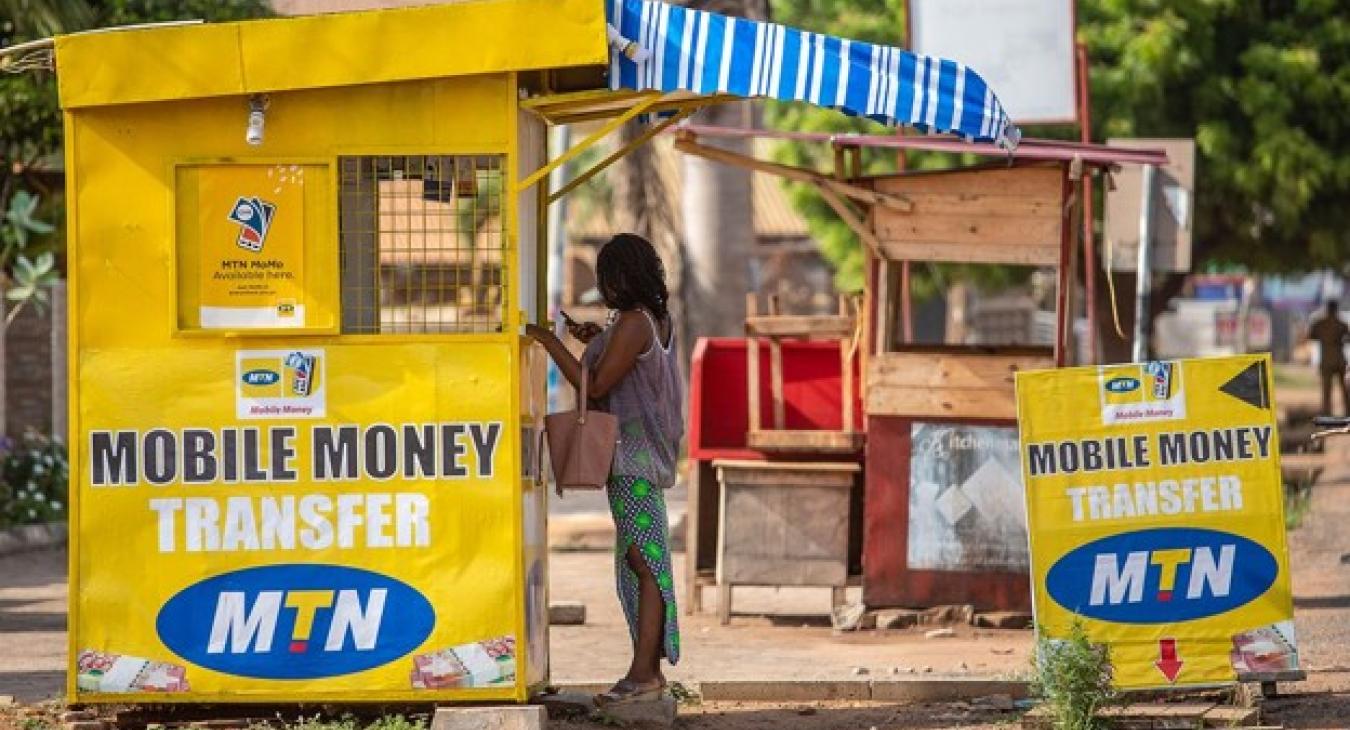
Mobile money has transformed everyday finance in Ghana. From paying school fees to transferring funds across the country, mobile money is now embedded in daily life. Yet behind this digital ecosystem are mobile money agents — small business operators who connect cash users to digital financial services, particularly in low-income and underserved communities. Despite their importance, many agents still rely on paper records, feature phones, and manual systems. A recent randomised controlled pilot in Ghana explored whether introducing these agents to digital tools and formal banking systems could improve their businesses.
The findings suggest that digital adoption is far more complex than simply providing technology. While digital tools can improve efficiency and expand financial inclusion, adoption depends heavily on understanding the realities, risks, and incentives shaping agents’ everyday operations.
The study focused on mobile money agents in Koforidua and surrounding communities in Ghana’s Eastern Region. Researchers tested whether Point-of-Sale (POS) devices provided by Eban Capital, onboarding into Ecobank’s agent banking system, training, and working capital support could help agents diversify beyond cash-in and cash-out services.
In principle, the benefits appeared clear. Digital tools could improve record-keeping, transaction processing, and access to formal banking services, while additional liquidity could help agents serve more customers. Banks would extend their reach and underserved communities would gain better access to financial services.
However, the study revealed that financial vulnerability strongly shaped adoption decisions. Average monthly commissions for agents were just over GHS1,054, while operating costs remained high. Many agents depended heavily on cash-out commissions, which are increasingly under pressure from growing competition and the expansion of digital payments. In such conditions, even minor disruptions or additional compliance costs can threaten business survival.
This helps explain why many agents approached digitalisation cautiously. Around two-thirds of participants had never used a smartphone or POS device before the study. Yet limited digital literacy was only part of the challenge. Even agents familiar with smartphones often preferred paper-based systems because they were simpler, more reliable, and already embedded in their daily routines.
The study describes this behaviour as “rational informality”. Agents were not rejecting innovation outright; rather, they were making calculated decisions to avoid additional risks, costs, and administrative burdens. Becoming a formal banking agent, for instance, required documentation such as police reports and business registration certificates. For many agents, the costs and uncertainty outweighed the perceived benefits.
Technical problems also undermined adoption. Agents reported battery failures, difficult interfaces, dormant accounts, and login issues with POS devices. More importantly, the banking platform did not integrate smoothly with existing mobile money wallets, creating liquidity management challenges across multiple disconnected systems.
These issues affected more than convenience. For small business operators, trust in technology depends on reliability. Frequent system failures and slow support responses quickly reduced confidence and contributed to abandonment of the tools.
The study highlights an important lesson for digital finance and financial inclusion initiatives. Hardware, training, or credit alone are unlikely to drive sustained adoption if the broader ecosystem remains weak. Working capital did not solve operational inefficiencies, and training could not compensate for unreliable infrastructure or cumbersome compliance processes.
Instead, effective digitalisation requires coordinated support. Regulatory systems must become more flexible for low-margin agents. Banks and mobile money operators need stronger interoperability between platforms, while technical support should be accessible and responsive. Training must also be continuous and practical rather than limited to one-off sessions.
Ultimately, the research shows that financial inclusion is not only about technology. It is also about trust, incentives, institutions, and the economic realities facing frontline service providers. Mobile money agents are entrepreneurs making rational decisions within constrained environments. As Ghana and other African countries expand digital finance systems, the lesson is clear: digital tools succeed when they are designed around the needs and realities of the people expected to use them.
This blog was produced as part of the “Mobile Money Agents’ Incentives to Adopt Digital Tools: A Randomised Controlled Pilot Study,” supported by ReFinD and implemented by Penplusbytes.
Principal Investigators: Emma Riley, Prince Boakye Frimpong, Kwami Ahiabenu (Corresponding Author: kahiabenu@knowledgeinnovations.com), and Alexander Fertig.