

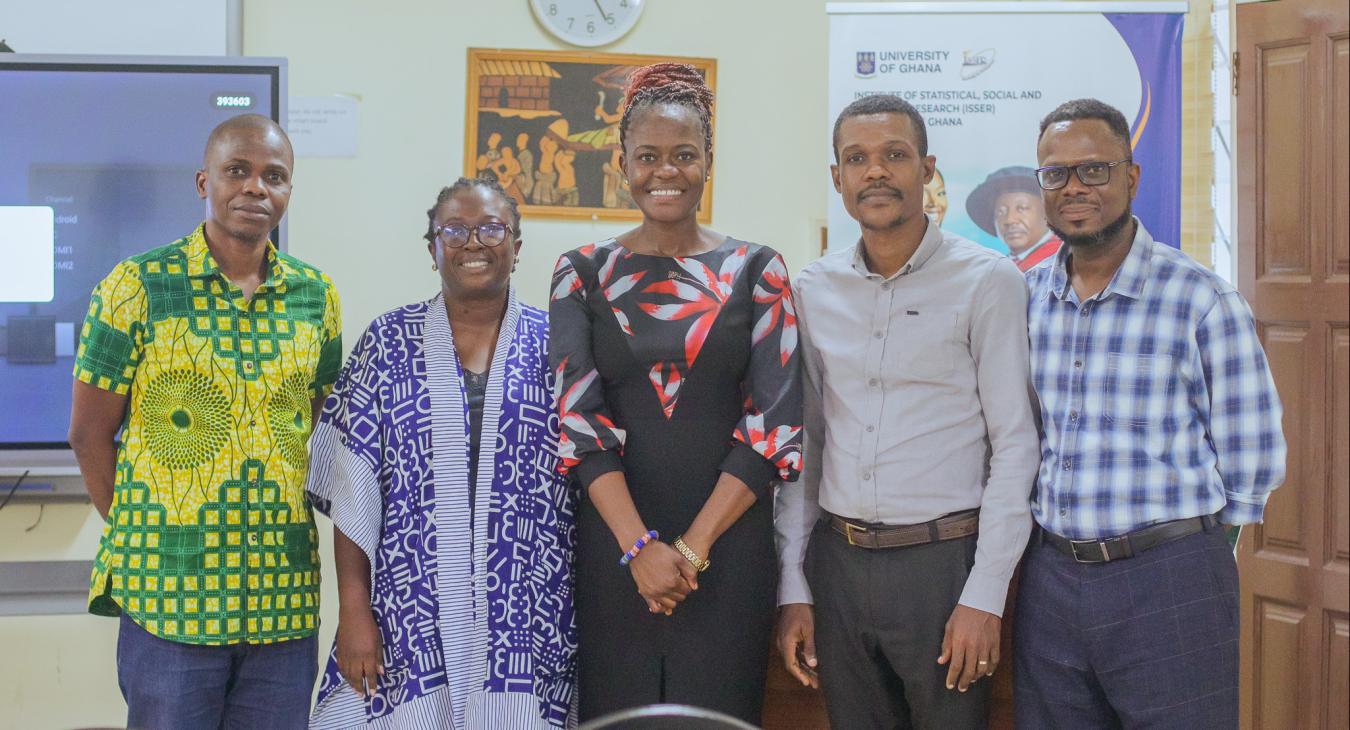
ReFinD has shared its results-based approach to communicating research, highlighting practical ways of moving evidence from generation to understanding and, ultimately, use in policy and practice.
Drawing on ReFinD’s experience, the session demonstrated how deliberate and strategic communication can strengthen the prospects of research influencing decisions and contributing to development outcomes.
Opening the session, Vicentia Quartey, Communication Officer at ISSER and Communication Manager for ReFinD, contrasted the traditional research communication pathway -- publication, dissemination and archiving -- with an impact pathway, where relationships, dialogue and feedback are integral to moving evidence towards decision-making.
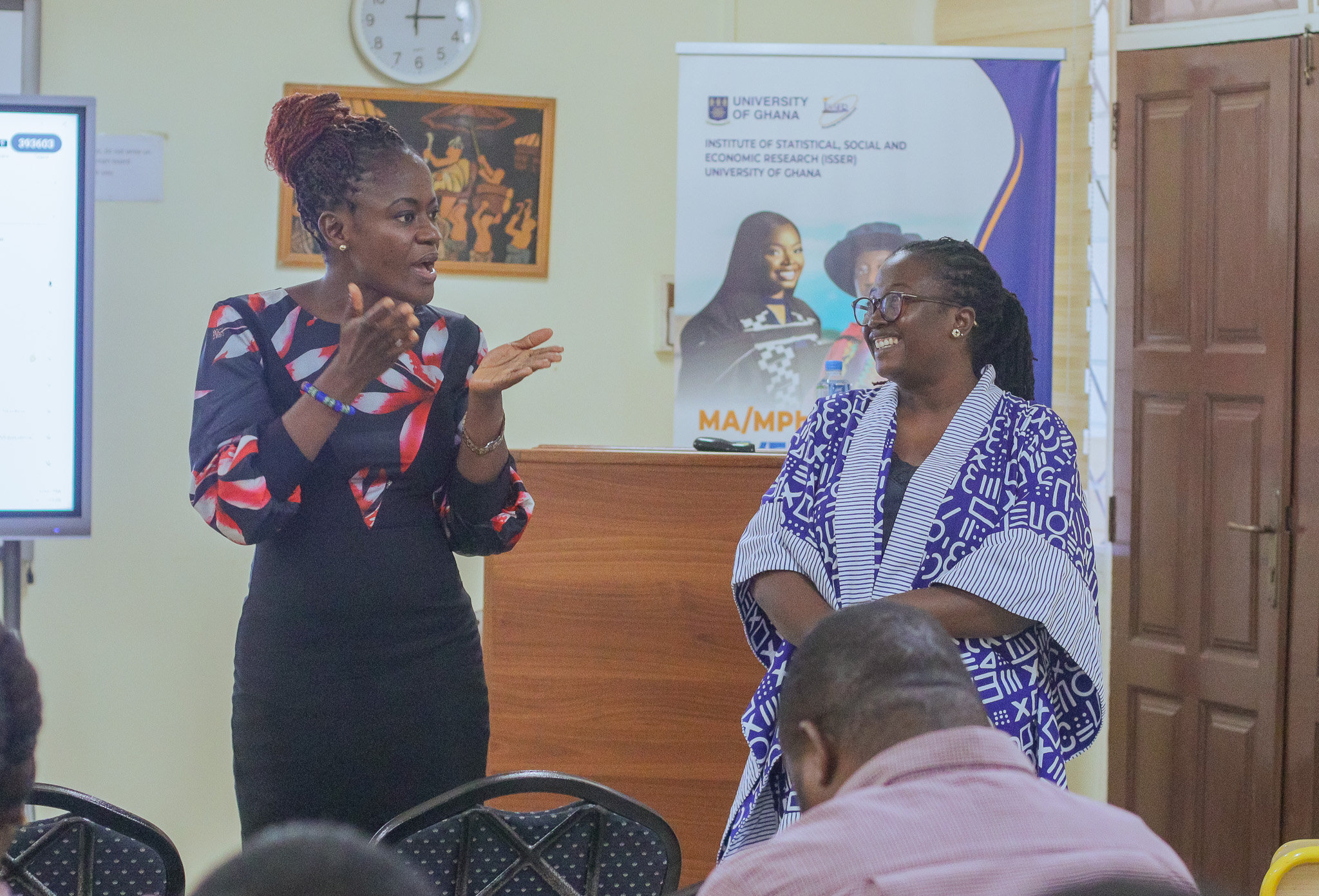
She noted that even excellent research can remain unused when it is too technical, arrives after decisions have been made, fails to connect with real-world problems, or comes from a source that is not trusted. Research communication, she emphasised, is “the bridge between evidence, influence and action”, rather than simply publishing and disseminating findings. As she summed it up: “Data informs, stories create meaning, relationships create trust.”
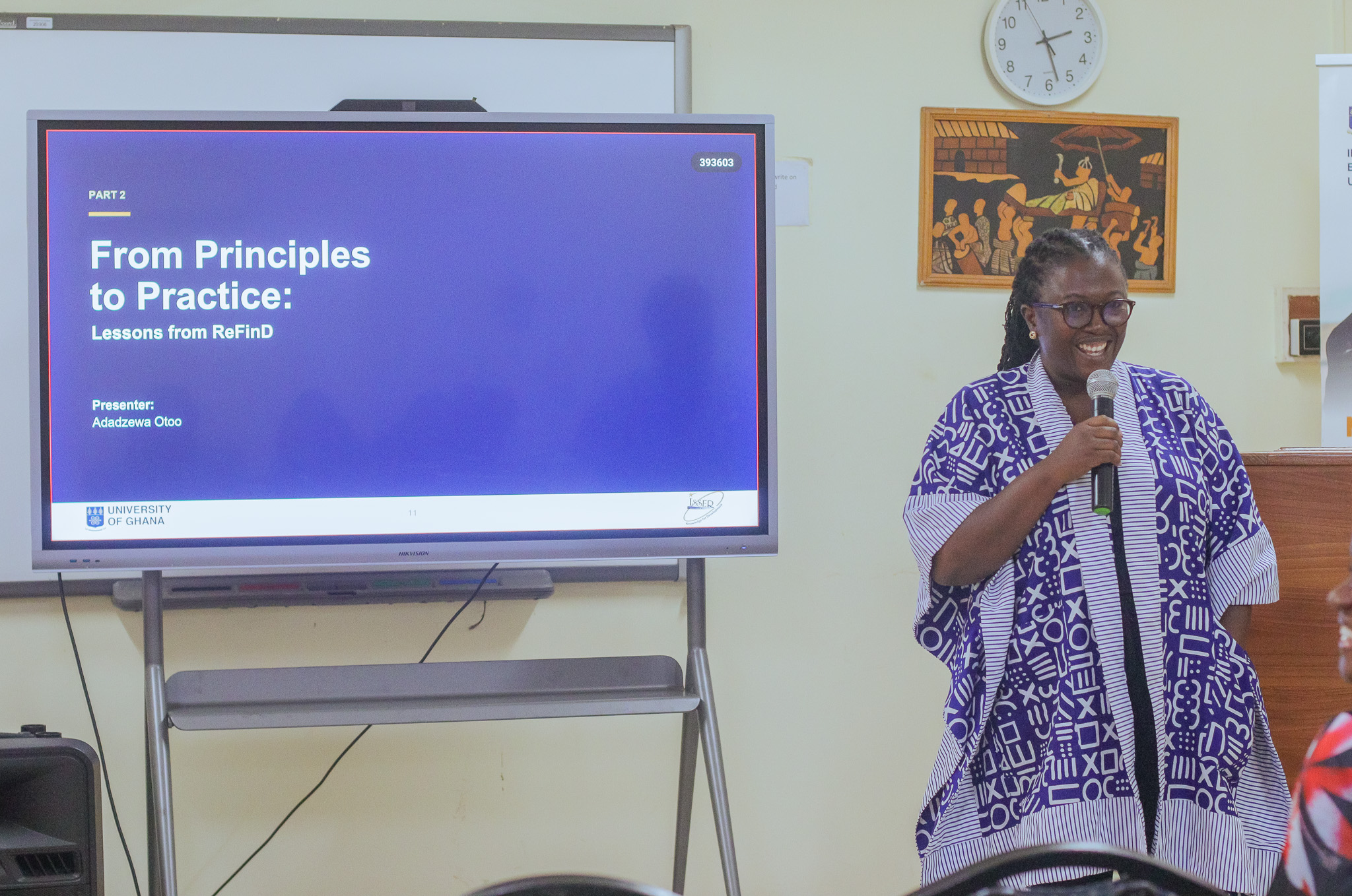
A key message from the session was that communication should be integrated into the research lifecycle from the outset, rather than treated as an end-of-project activity. As Roselyn Adadzewa Otoo, Project Director of ReFinD, noted, “At ReFinD, we treated communication as a research lifecycle, not an end-of-project activity.”
The discussion highlighted that effective research communication goes beyond mapping stakeholders. It requires building relationships with people and institutions within the research ecosystem, participating in relevant conversations and spaces, building trust, and creating opportunities for evidence to inform decisions.
Another important lesson was the need to be intentional about identifying communication opportunities. While some can be anticipated and planned for, others emerge unexpectedly. ReFinD pays attention to policy windows, sector moments and thematic windows that create opportunities to introduce relevant evidence into ongoing conversations and decision-making processes.
ReFinD’s experience also demonstrates the value of using multiple formats and channels to reach different audiences, including webinars, the ISSER Inclusive Finance Development Series, blogs, reports, policy briefs and presentations. Digital platforms further provide opportunities to translate, repackage and extend research findings for different audiences, while a consistent visual identity helps audiences recognise and engage with ReFinD’s work across formats.
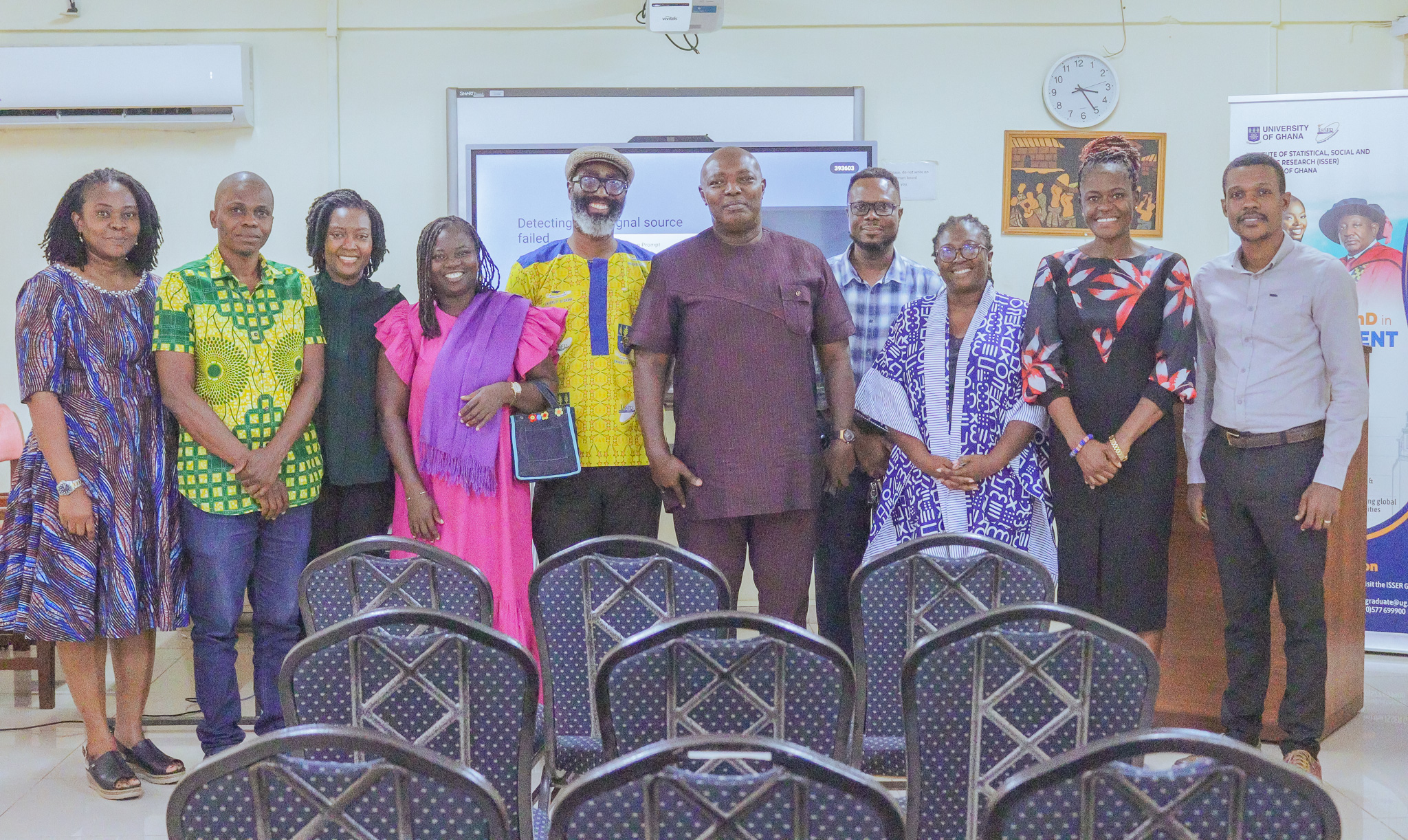
The seminar underscored that rigorous research alone does not guarantee impact. Effective communication helps make evidence accessible, relevant and timely, while relationships and strategic engagement create pathways for that evidence to be used.
For participants, particularly emerging researchers and graduate students, the session offered practical guidance on thinking about communication as part of research design and considering early on who might use their findings, what decisions they could inform, and how opportunities for evidence use can be created.
The seminar, “From Evidence Generation to Evidence Use: Communicating Research for Development,” was held on 1 September 2026 as part of the ISSER Seminar Series at ISSER, University of Ghana. The session was led by Roselyn Adadzewa Otoo, Project Director of ReFinD, and Vicentia Quartey, Communication Officer at ISSER and Communication Manager for ReFinD.